
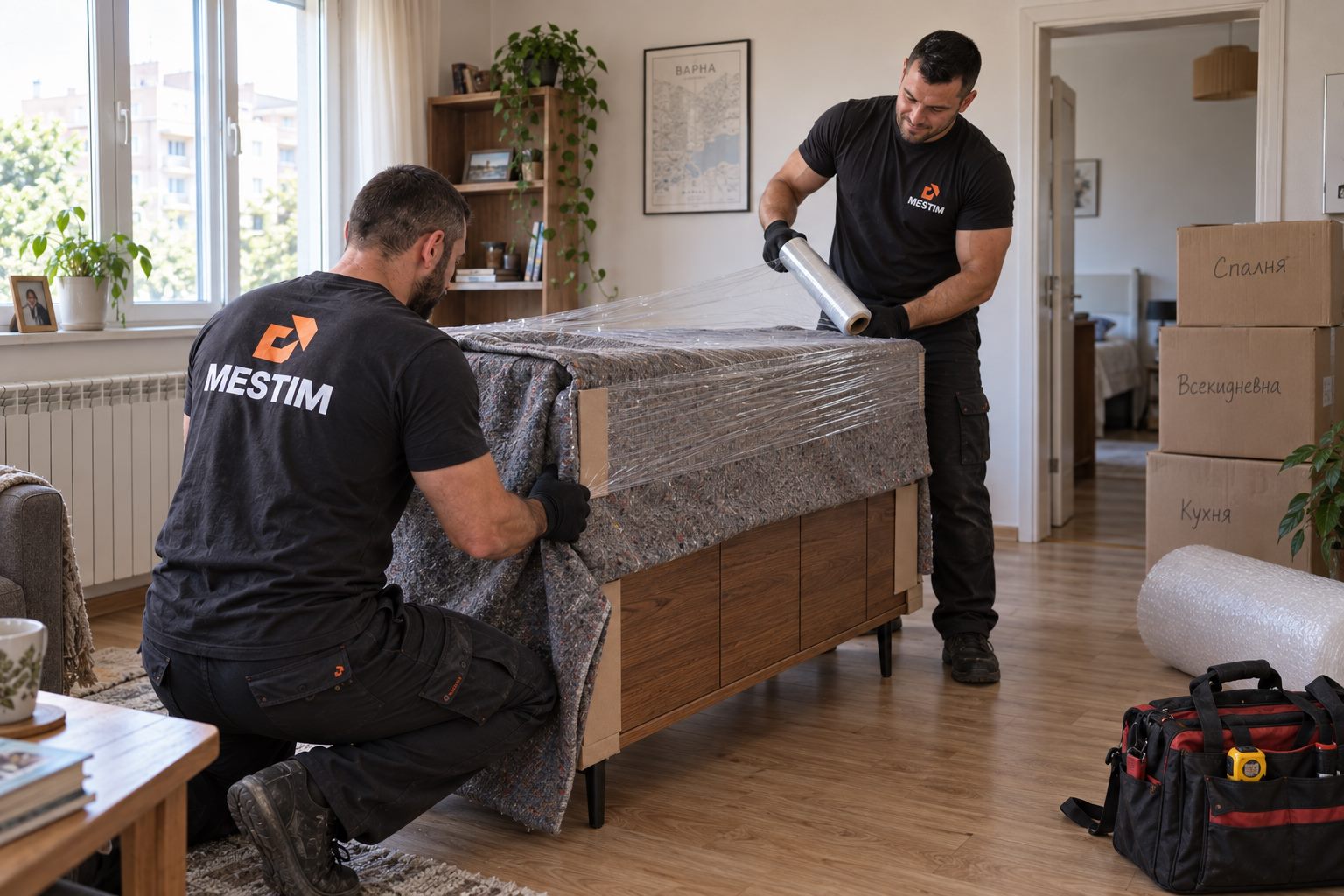
Moving tips: a guide and checklist
Moving is easier with a plan. Here is a week-by-week timeline, a packing checklist and practical tips from the MESTIM team - so everything arrives in one piece and in order, without the stress.
A step-by-step preparation timeline
2-3 weeks before
- Book a survey and a fixed quote to secure your date
- Declutter - sell, donate or book a removal for anything you don't need
- Get boxes and packing materials
- Give your new address to your landlord, employer and service providers
1 week before
- Start packing the things you rarely use
- Label boxes by room and contents
- Dismantle any furniture you won't need before the move
- Photograph valuable and fragile items before packing them
The day before
- Pack the last of your things and set aside the essentials for the first day
- Defrost the fridge and empty the washing machine
- Charge your phones and arrange access at both addresses (lift, parking)
- Confirm the time with the crew
On moving day
- Make sure there is a clear path and space for the van outside the entrance
- Keep documents, keys, medicines and valuables with you
- Check boxes against your list when loading and unloading
- Look round your old home for anything left behind before you leave
Packing checklist
Get these materials ready in advance. If you prefer, we can deliver them to your address or do the packing for you.
- Boxes in different sizes (small for heavy items, large for light ones)
- Stretch wrap and bubble wrap for fragile items
- Packing paper for crockery and glassware
- Tape, scissors and a marker for labels
- Protective blankets and covers for mattresses and sofas
- Plastic bags for screws and small furniture parts
6 practical packing tips
- Pack room by room - it makes unpacking much easier.
- Put heavy items in small boxes so they don't split and can be carried safely.
- Don't leave boxes half-empty - fill the gaps with soft textiles.
- Tape the bag of screws to the piece of furniture it belongs to.
- Mark boxes with fragile items clearly, on several sides.
- Put together a "first-day box" - chargers, documents, toiletries, tea/coffee.
How long a move takes
The time depends on the volume, the floor and the access, but as a rough guide: a studio or a single load takes 2 to 3 hours; a one-room apartment about half a day; a two-room from half a day to a full day; and a three-room apartment or a house a full day, sometimes over several trips. Dismantling and reassembling furniture, the lack of a lift and narrow staircases all make the job longer, so we take them into account in advance at the survey. If timing is critical - for example, handing back a rented property at a set time - tell us when you book so we can plan the right number of movers and finish on time.
How to pack different types of belongings
Proper packing is the difference between intact and broken. Here is how we prepare different groups of belongings so they stand up to the strain of loading, transport and unloading.
Crockery and glassware
Wrap each plate individually in packing paper and stand them upright, on their edges - that way they withstand pressure much better than when stacked flat on top of each other. Fill glasses with scrunched-up paper and put the heaviest dishes at the bottom of the box. Leave some space at the top and fill it with soft textiles so nothing moves.
Electronics and TVs
Use the original boxes where possible. If you don't have them, wrap the devices in bubble wrap. Before unplugging a TV or computer, photograph the connections at the back - then setting it up at the new address takes minutes. Flat-screen TVs are always transported upright; a panel lying flat can't take pressure and may crack.
Books, clothes and textiles
Books are heavy - put them in small boxes and don't go over 15-20 kg per box, so the bottom doesn't give way and the box can be carried safely. Move clothes on hangers in wardrobe boxes; fold the rest into suitcases or vacuum bags, which save a lot of space.
Pictures, mirrors and lamps
Tape a large "X" across the glass of pictures and mirrors - if there is a knock, the pieces stay in place instead of scattering. Wrap them in bubble wrap and cardboard and transport them upright, never lying flat under heavy items. Remove bulbs and shades from light fittings and pack them separately.
How to move large appliances
Large appliances are sensitive to tilting and vibration. A few simple steps protect them from costly damage.
- Fridge: defrost and dry it 24 hours in advance, secure the door and transport it upright. After the move, wait 2-4 hours (up to 24 hours if it was tilted) before switching it on, so the compressor oil can settle.
- Washing machine: drain the water from the hose and, if you have them, fit the transit bolts that lock the drum. Without them the drum moves about and can damage the shock absorbers.
- Cooker and oven: disconnect from the mains. Gas appliances may only be disconnected and reconnected by a qualified professional.
- Air conditioner: a split system must be removed and reinstalled by a technician - don't try to disconnect the refrigerant pipes yourself.
Dismantling furniture and loading the van
Wardrobes with sliding doors, double bed frames, large tables and kitchen units often won't fit through the door or round the turn of the staircase, so they are dismantled. Keep the screws in separate bags taped to the matching piece of furniture, and photograph the assembly if it is complicated - it saves time and mistakes when putting it back together.
Loading the van in the right order also protects your belongings: heavy and bulky furniture goes in first and at the bottom, with boxes and lighter items on top. The load is secured with straps so it doesn't shift on bends or when braking, and fragile items, pictures and mirrors go in last - upright, at the side and never under heavy items.
What the price of a move depends on
The price of a move isn't random - it is made up of several objective factors. That is why the free survey (on site or by video) gives you an exact, fixed price instead of a rough estimate over the phone:
- Volume of belongings - the number of rooms and pieces of furniture, and whether more than one trip is needed
- Floor and lift - without a usable lift, a per-floor fee applies
- Distance - within Varna or intercity (by the kilometre)
- Dismantling and reassembling bulky furniture
- Packing and packing materials, if you want them
- Access to the entrance - narrow streets and parking far from the door
What to know about moving in Varna
Much of Varna's housing is in prefab panel blocks or was built before 1990 - the lifts often can't take a wardrobe, a sofa or a larger washing machine, and in the city centre, the Greek Quarter and the old town the staircases are narrow with tight turns. In neighbourhoods such as Asparuhovo, Vinitsa and Galata, access and parking need planning in advance. Make sure there is free space for the van outside the entrance on moving day, and if the building has a building manager or set hours for loading, let them know in advance. We take these details into account at the survey, so there are no surprises in the price or the schedule.
Admin and household steps when you change address
As well as the physical move, a change of address brings a few admin tasks. Plan them in advance so you aren't left without electricity or internet in your new home:
- Electricity and water (the electricity distributor and the water company): tell your providers about the move and transfer or open an account at the new address.
- Internet and TV: request a move of the service a few days in advance - installation often takes time.
- Redirecting post and subscriptions: update your delivery address with banks, insurers and online shops.
- Address registration: when you change your permanent or current address, you submit an application to the relevant municipality or district.
- Neighbours and building manager: check the rules of the new building - loading hours, parking and maintenance fees.
Tip: make a list of the bills and subscriptions linked to your old address and update them one by one during the first week - that way nothing gets missed.
Moving with children, pets and plants
On moving day, children and pets feel calmer if they are with someone close or in a separate quiet room, away from the open doors and the loading. Water plants the day before and move them last, protected from cold and direct sun. Have the essentials ready for the first evening - water, food, bedding and a favourite toy - so the change is easy on the whole family. Small details like these often make the difference between a stressful move and a calm one.
How to spot a reliable moving company
To avoid damaged belongings and last-minute "extras", check these things before you choose a company:
- It offers a free survey and gives a fixed price in advance, not just a rough estimate over the phone.
- It has its own branded vehicles and equipment - straps, trolleys and protective blankets.
- It accepts liability for damage caused by its crew and says so clearly.
- It issues a receipt or an invoice for the service.
- It has genuine reviews and a recognisable presence in Varna.
- Be wary of companies that ask for a large deposit up front or refuse to do a survey.
At MESTIM this is exactly how we work: a free survey, a fixed price with no hidden fees, our own branded van and an experienced crew that knows the buildings and neighbourhoods of Varna. If you have a question about getting ready, call or message us - the consultation is free.